The City as an Instrument: American Textures in Mabuta's 2026 Tour Mix
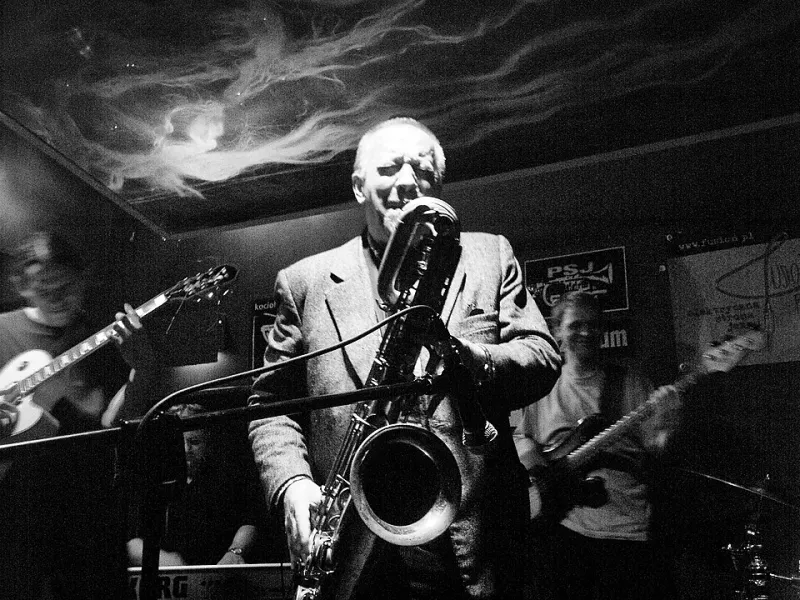
Photo: Chepry 💬 (Andrzej Barabasz) 📷 🇵🇱, CC BY-SA 4.0, via Wikimedia Commons
Mabuta's 2026 US tour was built for rooms, not screens. The band arrived with a working repertoire, a compact flight case, and the usual tour-day rituals: coffee, cables, a quick walk to clear the head. But somewhere between soundcheck and the last note, the cities started writing themselves into the music. Not as samples pasted over the top, and not as a gimmick. More like weather. You notice it after the fact, when a transition feels a little heavier in Chicago than it did in Portland, or when an improvised phrase carries the metallic hum of a platform you stood on six hours earlier.
This is not a story about chasing local color. It is about how place gets absorbed when a band is moving fast and listening closely. Across the 2026 US run, five everyday American sounds kept showing up—sometimes captured on a phone, sometimes remembered, sometimes simply played back by the room itself. Here are the field notes.
Platform Hum: The Subway as a Low-End Idea
The first sound is not glamorous. It is the rumble under a city, the ventilation roar and brake squeal that make a subway platform feel like a temporary rehearsal space. In New York, the band found itself waiting more than once, instruments parked near the turnstiles, listening to that deep mechanical exhale. Onstage that night, the low end had a little more grit. The bassist did not imitate a train, exactly. He leaned into the same frequency—a steady, almost tidal push that made the global-jazz patterns feel grounded in concrete and steel.
What matters is not the literal noise. It is the tempo of patience. A platform teaches you to wait, then move all at once. Mabuta's interludes picked up that push-and-release, especially in the handoffs between a West African-rooted groove and a looser, post-bop drift. For US listeners, it is a reminder that the city is already composing. The band just found a way to answer.
Radiator Rhythm: Hotel Rooms with a Pulse
Hotel radiators are the unofficial percussion section of American touring. They knock, hiss, settle, and knock again. In older buildings, the rhythm is stubborn and irregular—nothing you would program on purpose. During the 2026 run, a few of those rooms became accidental listening labs. A radiator would start its clatter while someone was warming up, and the phrase would bend around it. Not on the record. Not as a fixed part. Just long enough to leave a mark.
This is where Mabuta's short-album discipline meets road life. The band has always been interested in what fits, what can be carried, what can be left out. A radiator is the opposite of a clean mix. It is a nuisance with a groove. But in the live set, that kind of irregular pulse crept into the quieter passages—a brushed cymbal, a muted piano note, a pause that felt a little more human than metronomic. The result was not lo-fi nostalgia. It was a reminder that rhythm is often a negotiation with the room.
Diner Afterglow: Late-Night Harmonies
After a show, the city changes key. In several US stops, the post-gig ritual meant a late-night diner: vinyl booths, bad coffee, a menu that somehow covers breakfast and dinner at the same time. Those rooms have their own soundtrack—the clink of plates, the low murmur, the fluorescent hum. More than once, a band member hummed a new interval over that background and brought it to soundcheck the next day.
Onstage, the diner effect showed up as harmony, not noise. Mabuta's global-jazz language already moves between continents, but the diner harmonies were distinctly American in their warmth and slight weariness. Think close intervals, not grand statements. A piano chord that sits behind the beat. A horn line that sounds like it is finishing someone else's sentence. The point was not to recreate a diner. It was to keep the intimacy of one—the feeling that a song can be overheard, not announced.
The Door Between Songs: Venue Acoustics as Transition
Every venue has a door. Sometimes it is a stage door, sometimes a loading entrance, sometimes the heavy front door that slams while the room is still filling. On the 2026 US dates, those doors became part of the transitions. A door opening during a quiet section changes the air pressure. A door closing can sound like a downbeat. Mabuta's setlist has always treated transitions as music, not admin. This tour pushed that idea further.
Instead of filling every gap, the band let a few silences stand. In Los Angeles, a late arrival clanged through the room and the next tune started from that accidental punctuation. In Chicago, the stage door opened onto a cold snap and the horn player leaned into the draft—not literally, but in the breathiness of the next phrase. These are small things. They are also the difference between a concert that could happen anywhere and a night that could only happen there.
City Rain: The Load-Out Chorus
Rain is the most democratic sound on tour. It does not care about genre. It arrives on venue roofs, in parking lots, on the walk from the van to the hotel. During the 2026 run, a few cities offered rain at exactly the wrong time—load-out. The band stood under an awning, cases getting damp, hearing that soft, continuous wash against the street. Onstage earlier, the music had already leaned toward that texture: cymbals that shimmered rather than crashed, guitar lines with a little mist in them, a bass tone that felt like wet pavement.
Mabuta has never been a band that needs to announce its influences. The rain did not become a sample or a title. It became a way of hearing space. In a global-jazz context, that matters. The music travels, but it does not float. It lands in specific cities, with specific weather, specific doors, specific late-night counters. The 2026 US tour made that plain.
What US Listeners Can Hear Now
The useful takeaway is not a checklist of sounds to listen for. It is a shift in attention. Next time you hear Mabuta in a US room, listen to how the band leaves space for the room to answer. The platform hum, the radiator knock, the diner murmur, the door, the rain—none of them are the song. But they are part of the reason the song felt different that night. Place entered the mix quietly, the way it always does when a band is paying attention. For listeners, that is the invitation: hear your own city in the music, not as decoration, but as a collaborator.