Press Play Here: A Five-Track Entry Point to Mabuta's Global Jazz
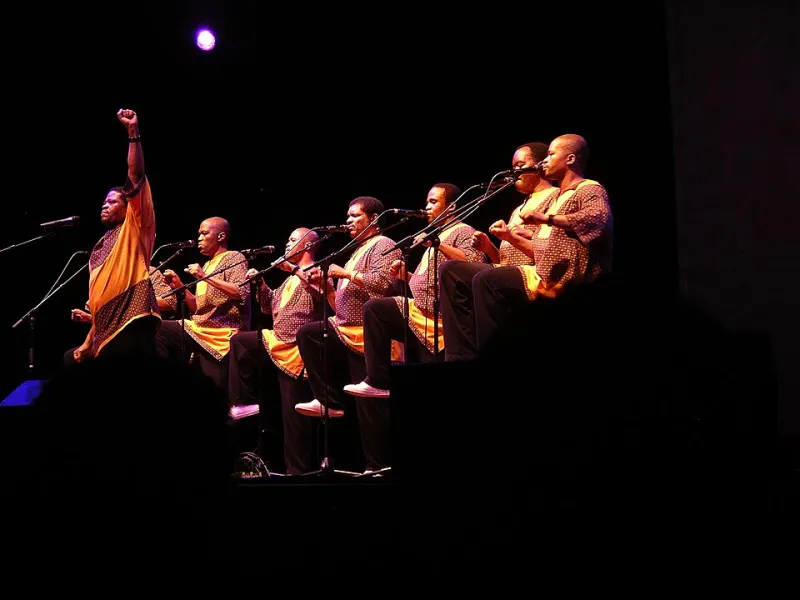
Photo: Silar, CC BY-SA 4.0, via Wikimedia Commons
If you have been circling Mabuta's catalog like a tourist reading a menu in a language you almost know, this is your table. The band's music can feel like several cities talking at once: a bass line from one place, a horn phrase from another, a drum pattern that refuses to sit still. That is the point. But it does not mean you need a syllabus to get in. As of 2026, the catalog is deep enough to reward a deep dive, but it is also friendly enough to enter through the front door. Below is a five-track route for US listeners who want a way into global jazz without turning it into homework. Think of it as a path, not a ranking.
1. First Light, Second City — The Handshake
This is the track to play when someone says they do not really get jazz. It opens with a bass figure you can hum before you notice you are humming it, then a horn line answers with a phrase that sounds like a question and an answer at the same time. The groove is loose but not messy, closer to a late-night Chicago conversation than a conservatory exercise. There is space in the mix, which matters. You can hear the room, the players listening to each other, the small hesitations that make a band feel human. If global jazz has a front door, this is it.
2. Paper Lanterns — The Melody That Slows You Down
After the handshake, go here. Paper Lanterns is the melodic one, a minor-key theme that unfolds slowly and then widens into a chorus you did not see coming. The hook is not flashy; it is the kind of melody that feels familiar on first listen, as if you had heard it in a film or a hotel lobby in another life. For listeners who come to music through songwriting rather than improvisation, this is the track that makes Mabuta click. It shows the band's patience, and it gives your ears a break from counting beats.
3. Night Bus to the Cape — The Rhythm Puzzle
Now the floor moves. Night Bus to the Cape is built on a layered percussion pattern that sounds simple until you try to tap along. The bass holds the center while the drums and shakers trade accents around it, and the horn line floats above the whole thing like it is running slightly late for a train it knows will wait. This is where Mabuta's global-jazz identity becomes obvious without becoming a lecture. You do not need to identify the rhythms to feel them. Just let the track do its trick: it makes your head nod before your brain catches up.
4. Quarter Past Marrakesh — The Groove With Dust on Its Shoes
If Night Bus is the puzzle, Quarter Past Marrakesh is the payoff. The groove is warmer and more open, with a bass line that walks like it has been out all day and a guitar or keys figure that keeps circling back to the same small phrase. It is the most immediately physical track on this list, the one that makes a kitchen feel like a club and a commute feel shorter. For US listeners who love funk, soul, or Afrobeat but are not sure how jazz fits in, start paying attention here. The rhythm section is doing a lot of work, but it never shows off.
5. The Long Corner — The Deep End, Gently
Save this one for last. The Long Corner is the patient track, a two-chord vamp that gradually accumulates horns, percussion, and small melodic details until the whole thing feels bigger than it did at the start. It rewards a listener who has already been through the first four tracks, because it assumes you are comfortable with space. This is the one that hints at where Mabuta can go live, where a groove can stretch and breathe and turn a corner without announcing itself. It is not the catchiest track here, but it might be the one you return to most.
A Listening Order That Makes Sense
Play them in the order above if you want a gradual slope: handshake, melody, rhythm puzzle, groove, deep end. That sequence gives you a little of everything without asking too much too soon. If you have a shorter attention span, pair First Light, Second City with Paper Lanterns first, then let Night Bus to the Cape pull you into the rhythmic side. The point is not to hear everything at once. The point is to find the door that opens for you.
If You Only Play One
Send First Light, Second City to the skeptical friend. It is the clearest introduction: a hummable bass figure, a horn hook that answers back, and a groove that leaves room for a conversation. It says global jazz without making anyone feel like they forgot to study. If that one lands, the rest of the route is waiting.