Before the First Note: Five Rhythms That Quietly Shaped Mabuta's Sound
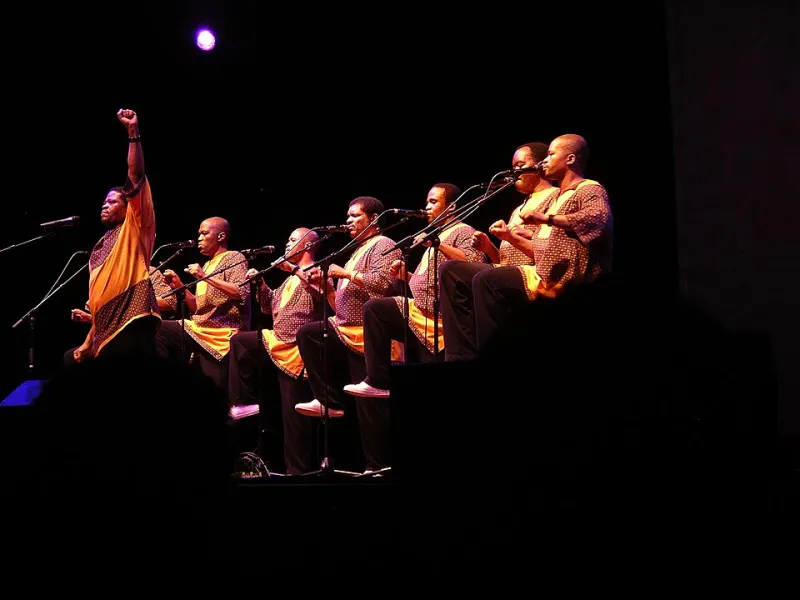
Photo: Stephen Neilson, CC BY-SA 2.0, via Wikimedia Commons
If you're catching Mabuta for the first time on their US run, here's a secret: you don't need to know anything going in. The music works on feel alone. But if you're the kind of listener who likes to peek behind the curtain — who hears a bassline and wonders where it was born — this map is for you.
Mabuta's sound didn't come from nowhere. It's a conversation between continents, and like most good conversations, it has a history. Here are five rhythms that built the band, one thread at a time.
1. Marabi: The Keyboard Groove That Started Everything
Go back to the shebeens of 1920s and '30s Johannesburg and you'll find marabi — looping, hypnotic keyboard vamps played at all-night parties, blending African harmonic cycles with American jazz and ragtime records that had made their way south.
Marabi's DNA is everywhere in South African jazz, and Mabuta is no exception. That patient, circular quality in their slower tunes — the sense that a chord progression could breathe forever — comes straight from this tradition.
Start with: Early Abdullah Ibrahim (as Dollar Brand), especially the solo piano work. Then jump to the Soul Giants era of township jazz. You'll hear the loop before you can name it.
2. Cape Jazz: Where the Melody Leads
Down in the Cape, marabi met a different accent. Cape jazz — think Basil Coetzee, Robbie Jansen, the early Ibrahim records cut in Cape Town — favors a lilting, singable melody riding over light, dancing rhythms. It's the sunniest strain of South African jazz, and it's the reason Mabuta's horn lines often feel like songs first and solos second.
For US listeners, the closest touchstone might be the melodic openness of early Weather Report, but with a gait that's unmistakably from the Cape Flats.
Start with: Manenberg by Abdullah Ibrahim. It's the genre's thesis statement and still one of the most beautiful four minutes in jazz, full stop.
3. Maskandi and the Guitar Thread
Not everything in Mabuta's toolkit comes from jazz. Maskandi — the fast-fingered, narrative-driven guitar music of Zulu migrant workers — contributes a rhythmic snap and a storytelling instinct. Listen for the way Mabuta's guitar parts sometimes chatter and answer the horns like a second voice. That call-and-response sensibility runs deep in maskandi, and it gives the band's arrangements a conversational looseness.
Start with: Phuzekhemisi, or any classic compilation of 1980s maskandi. Don't overthink it — just notice how the guitar never stops talking.
4. Gqom: Durban's Digital Pulse
Now flip to the present tense. Gqom, the raw electronic style that came out of Durban's townships in the 2010s, strips dance music down to broken percussion and pressure-drop bass. No chords, no mercy.
You won't hear gqom literally in Mabuta's sets, but its influence is there in the band's rhythmic edge — a willingness to let a groove sit slightly off-balance, to favor tension over polish. South African electronic music changed what a rhythm section could do, and Mabuta absorbed the lesson.
Start with: DJ Lag's early singles, or the Gqom Oh! compilations. Play it loud. Then notice how much lighter Mabuta's odd meters feel afterward.
5. Jazz-Fusion: The American Accent
Finally, the thread that connects Cape Town to Chicago. Mabuta's harmonic palette — the electric keys, the extended chords, the way a tune can pivot on a single sus chord — owes a real debt to US jazz-fusion: Herbie Hancock's Headhunters era, Weather Report, the whole 1970s streak of bands who made complexity feel like fun.
This is the part of the map that should feel most familiar to American audiences, and it's also the bridge. When Mabuta plays a US room, this is the doorway the crowd walks through before discovering everything on the other side of it.
Start with: Thrust by the Headhunters, then Heavy Weather. If you know these already, you're halfway there.
Putting the Map Together
Here's the fun part: queue these five threads in order — marabi, Cape jazz, maskandi, gqom, fusion — and you'll hear Mabuta's whole sound assemble itself in your head before the band plays a note. The circular patience of marabi. The melody-first instincts of the Cape. The guitar that talks. The rhythmic risk of gqom. The harmonies of American fusion.
None of it is a gimmick. It's just what happens when musicians grow up listening across oceans and then get honest about what they heard. Bring your ears. We'll handle the rest — see you at the show.