What Fits in the Flight Case: Mabuta's Traveling Instrument Locker, Opened
Open any of our flight cases and you'll find two things: instruments we'd run into a burning building to save, and a laminated customs letter we've had to use more times than we'd like to admit.
People assume a band's sound lives in the players. It does — but it also lives in the gear, and gear is heavy, fragile, and expensive to fly across an ocean. So every US run starts with the same question: what actually defines Mabuta's voice, and what can we borrow from a stranger in, say, Philadelphia?
The Non-Negotiables
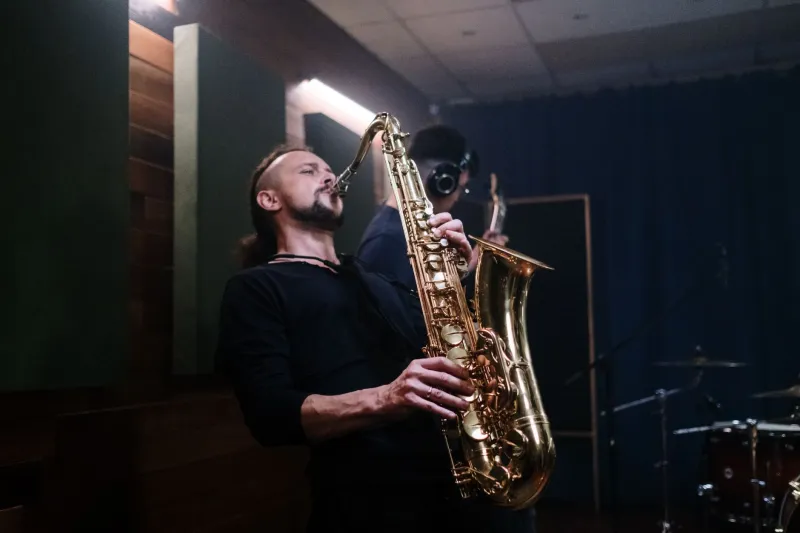
A few things never get checked in as luggage. Our tenor saxophone — the one you hear carrying the melody on most of our recordings — travels in a hard case that goes into the cabin, wedged into an overhead bin while the flight attendant pretends not to notice. That's not a choice, it's a policy. A saxophone neck can be replaced. The one that's been played into that particular shape for a decade cannot.
Same story with the bass. The upright stays home — nobody in their right mind flies an acoustic bass across the Atlantic for a three-week run. What comes instead is our electric bass and a small pedalboard that's been rebuilt so many times the Velcro has Velcro. It's not the same instrument, and we've stopped pretending it is. The electric version pushes the arrangements somewhere leaner, more pointed. US audiences, we've found, lean into that.
The keyboards are the one place we gave up entirely. Our studio parts were cut on an old Rhodes with a personality disorder — two dead notes in the middle register that we eventually wrote around instead of fixing. You can't check that in a suitcase. So we rent keys on the road, and every gig is a small gamble.
Renting a Stranger's Piano
There's a particular comedy to backline rental. You email a company in advance, describe exactly what you need, get a confirmation with photos, and then a road case rolls into the venue containing something that is technically the correct instrument but spiritually a completely different one.
We once played a date where the rented Rhodes turned out to be a digital stage piano with a 'Rhodes preset.' The sound engineer saw our faces and just shrugged. You make it work. Actually, sometimes it's better than work — that night we stripped the keyboard parts down to single-note figures, which pushed the horn section forward and gave the whole second set a sparser, more open feel we ended up keeping.
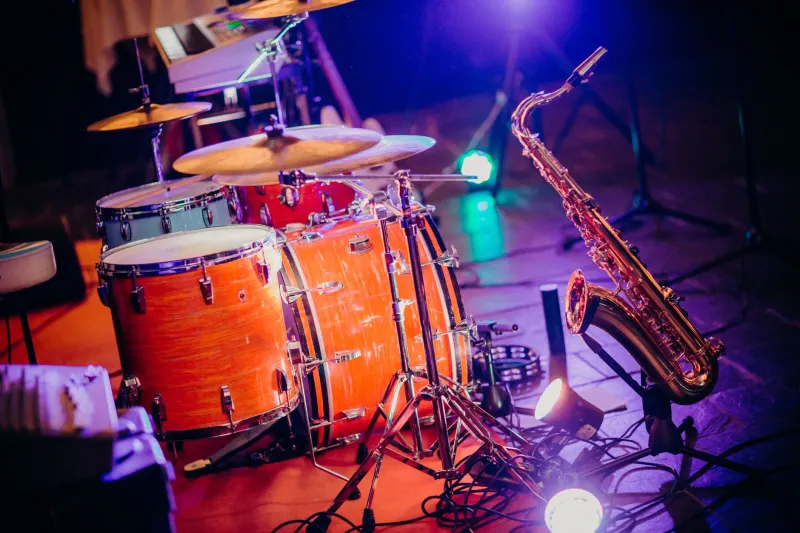
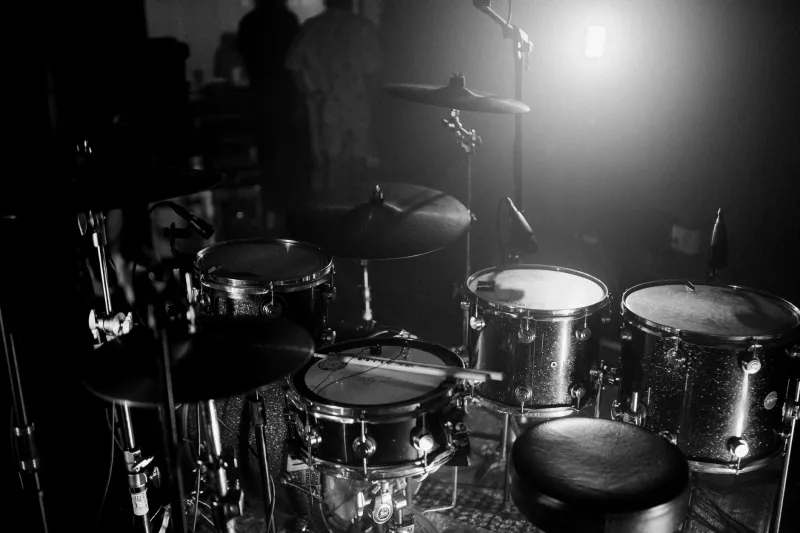
Drummers have it worst. Our percussionist carries a small kit of hand pieces — a djembe, a shaker collection that has its own insurance policy, and a frame drum older than half the band. The rest is sourced locally: kick, snare, hats, whatever cymbals the house has. This means the drummer relearns the kit every single night. The ride might be 22 inches in Boston and 19 inches in Portland. He tunes to the room during soundcheck like a golfer reading a green.
The Customs Letter
The laminated letter I mentioned is a work of art. It's addressed 'To Whom It May Concern at Any Port of Entry' and lists every instrument, serial number, and approximate value, plus a paragraph explaining that we are a professional ensemble on a documented tour. It has saved us at least three hours of collective airport grief per tour.
It has not, however, saved us from everything. One border agent was deeply suspicious of the djembe, apparently on the theory that hollow wooden drums are a classic smuggling vessel. He asked us to play it. In the middle of the terminal. Our percussionist — a professional — gave the least enthusiastic two-bar groove ever performed, and the agent waved us through with what we choose to read as respect.
Why the Band Sounds Different in Every City
Here's the honest part: geography changes our tone, and not just because of rented gear. Rooms in the US tend to run drier than the halls we recorded in back home. Our arrangements were built with a certain bloom in mind — the sound hanging in the air a half-beat longer than it should. In a tight American club, that bloom disappears, so we stretch phrases further, hold space differently. In a converted church somewhere in New England, the opposite happens and suddenly everything rings like a bell.
Add in the rental lottery, the local backline, whatever piano the venue is proud of, and you get a band that's never the same twice. Some artists would call that a problem. We've come to think of it as the whole point. The songs are the map; the gear and the room redraw the route every night.
So if you come to a show and notice the keyboard sounds a little different than the record, or the drums crack sharper than you expected — that's not a mistake. That's the locker, the rental house, the customs letter, and the room, all having a say. In a band that lives between two hemispheres, the sound was never meant to be a fixed thing. It's whatever we managed to carry, plus whatever we found when we landed.