Crate Logic: The Record-Shop Detour That Resets Mabuta's Ear
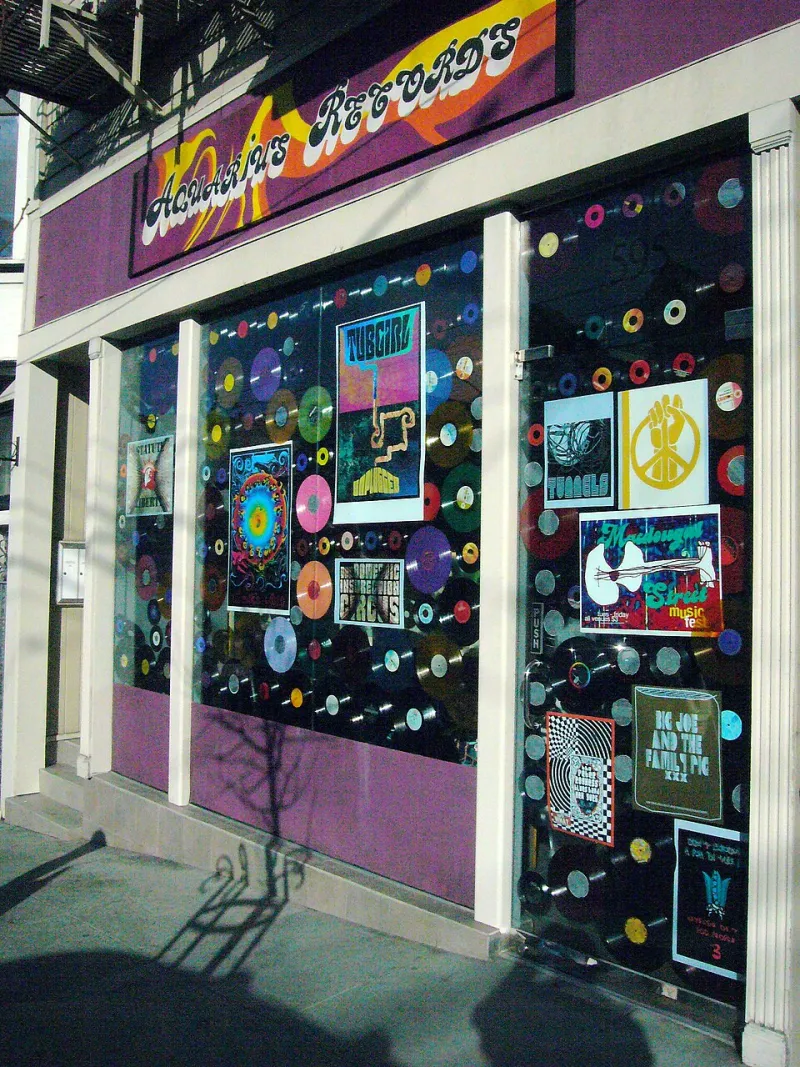
Photo: David Lytle, CC BY 2.0, via Wikimedia Commons
A day off on a tour has a bad reputation. Ask anyone who has spent three weeks in a van: the free day is rarely free. It is laundry, a pharmacy run, a phone call home, and a nap that ends too soon. For Mabuta, the 2026 US run has added one more item to that list — a record-shop detour that has less to do with shopping than with recalibrating the band's ears.
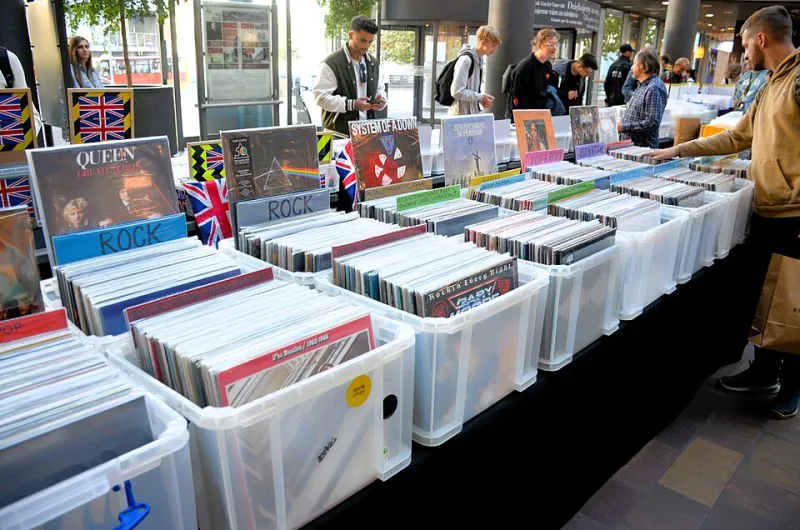
The logic is simple. A tour is a sequence of rooms, soundchecks, and load-ins. By the third week, the same 12 songs can start to feel like furniture. An afternoon in a record store scrambles that familiarity. There is no setlist, no monitor mix, no clock. Just bins, a listening station, and a stranger's taste. For a band that trades in global jazz, that is not a hobby. It is maintenance.
The Case for Wasting an Afternoon
Mabuta's music depends on attention — the kind that notices a rhythm before it becomes a groove, or a horn line that sits just behind the beat. Touring can dull that attention. Venue soundchecks reward efficiency. Record shops reward the opposite.
The band's approach on this run has been deliberately loose. No appointments, no wish lists, no collector checklists. Someone maps two or three shops within walking distance of the hotel or the venue, and the group splits up. The only rule is that nobody buys the first record they pick up. The second rule is that everyone has to bring one recommendation back to the van.
That last part matters. Record-store owners are local filters. They know which gospel LP from the 1970s still turns up in dollar bins, which reissue is worth the import price, and which local label pressed 300 copies and moved on. Those conversations are not promotional. They are the kind of low-stakes exchange that touring musicians rarely get: a recommendation with no agenda attached.
What Actually Gets Pulled
The band's haul is not a neat row of rare jazz. It leans toward spiritual jazz, private-press gospel, highlife, dub, 1970s Brazilian sessions, out-of-print soul, and the occasional field recording with a water-stained sleeve. Condition matters more than collector hype. A clean copy of something common beats a battered copy of something famous.
The wildcard is mandatory. One record per stop has to be a true detour — a spoken-word album, a local choir, a teaching record, a regional pop compilation with no obvious connection to the set. Those are the finds that tend to surface later, sometimes as a 30-second intro, sometimes as a tuning note, sometimes as nothing at all. Not every record has to earn its keep. The point is to keep the ear off balance.
Five Shops, Five Reasons
A short, fan-friendly list from stops on the 2026 US run. Hours change, so call ahead; none of these are affiliate links.
Dusty Groove — Chicago. The deep-jazz and global reissue section is the draw, but the real value is the listening stations. Start in the international bins, then work backward. Ask about recent arrivals from West Africa and Brazil.
Electric Fetus — Minneapolis. Broad, well-organized, and genuinely local. The used jazz is hit-or-miss, but the regional section is a good place to find upper-Midwest gospel, folk, and private-press records that never traveled far.
Waterloo Records — Austin. A Texas-sized new-and-used selection with a strong local-artist shelf. The dollar bins are worth the time. So is the in-store calendar, even if you are only there for an afternoon.
Grimey's — Nashville. A reliable stop for soul, country, and rock, with a used section that rewards slow browsing. The staff picks are not shy about local records, which is exactly the point.
Easy Street Records — Seattle. West Seattle's used bins are the reason to cross the bridge. The jazz section is solid, the coffee is close, and the Pacific Northwest shelves offer a useful counterweight to the usual East Coast jazz canon.
A Listener's Guide to Retracing the Route
You do not need a tour van to follow the same trail. A few practical notes:
- Go on a weekday if you can. Weekend crowds are fine, but restocks and staff attention tend to land earlier in the week.
- Bring cash. Some shops still offer a small discount, and it keeps the budget honest.
- Start in the dollar bins, then move to the genre shelves, then check the staff picks. Alphabetical browsing first is how you miss the weird stuff.
- Ask one good question instead of five vague ones. Try: What is a local record from the last five years that does not leave this city?
- Use the listening station. Judge a record by the second track, not the first. Openers are designed to impress; second tracks tell you what the album actually is.
- Buy one record you cannot justify. That is the whole exercise.
- Check the hours. Independent shops close early more often than you think.
- Leave room in your bag. Vinyl is heavy, and a carry-on is not a shipping crate.
The Setlist Echo
None of this is a marketing stunt, and it is not a secret tour diary either. It is a working habit. The records that come back to the venue do not always change the set. More often, they change the way the band listens to the set. A dusty gospel chord, a highlife guitar line, a dub echo — these are not samples waiting to be used. They are reminders that the music has more room in it than the night's running order suggests.
So if you see a rented van idling outside a record shop in a US city this fall, do not assume the band is killing time. They are probably inside, arguing about a $4 record with a torn sleeve. That argument is part of the tour, even if it never makes the setlist.