Lacquer, Plating, Patience: What Mabuta’s U.S. Vinyl Gets Right
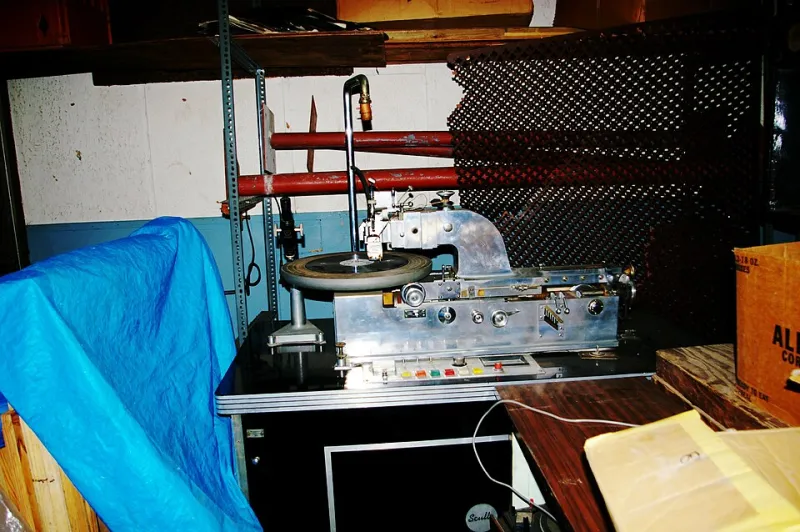
Photo: Christina Xu, CC BY-SA 2.0, via Wikimedia Commons
Vinyl is not a format. It is a chain of decisions. For Mabuta’s U.S. vinyl release, those decisions begin long before the needle drops: with the mastering engineer, the lacquer cut, the plated stampers, the pressing plant, the test pressings, and the small compromises that separate a record that sounds alive from one that sounds like a photograph of a record. The differences are not mystical. They are audible.
The Chain From Master to Mat
A vinyl cut is a translation. The master might be digital or analog; the lacquer is physical. The cutting engineer has to decide how much low end the groove can take, how much high-frequency energy the cartridge can track, and how wide to make the stereo image without making the pressing unstable. Every choice affects the next one. Cut too hot and the record jumps. Cut too safe and the music goes flat.
For Mabuta’s global-jazz mix—bass, drums, keys, horns, and all the small percussion that gives the music its texture—the low end is the first negotiation. Too much sub-bass and the groove becomes a rumble. Too little and the music loses its floor. The best US pressings find a middle path: a bass that feels solid but not bloated, a kick that has punch without swallowing the bass line.
Low End Is a Decision
Collectors often talk about 'warmth' as if it were a fixed quality of vinyl. It is not. Warmth is a set of choices about compression, EQ, and groove spacing. A well-cut record can have warmth and detail. A poorly cut one can have warmth and mud. On Mabuta’s US vinyl, the low end should be judged by what it does to the rest of the mix. Can you hear the bassist’s attack? Can you follow the kick drum without losing the piano? Does the music breathe when the horns enter?
The pressing plant matters here too. Plating and pressing introduce their own variables: stamper wear, vinyl formulation, cycle time, and quality control. A good plant does not fix a bad cut, but a bad plant can ruin a good one. Test pressings are not a formality. They are the first real listen—the point where the cutting engineer, the label, and the band find out whether the translation survived.
Cymbals and Room Tone
Mabuta’s music lives in the details: the shimmer of a ride cymbal, the air around a horn, the decay of a room. Those details are fragile on vinyl. High frequencies are where the format can either open up or turn harsh. A cut with too much top end can make cymbals sound like broken glass; too little and the music loses its sparkle. The goal is not brightness. It is clarity.
Room tone is even trickier. A record that preserves too much ambience can feel distant. A record that removes it can feel dead. Mabuta’s best recordings leave enough space for the listener to feel the room without hearing the walls. On vinyl, that means the cutting engineer has to protect the quiet passages as carefully as the loud ones. The silence between notes is part of the arrangement.
What Collectors Should Listen For
When the U.S. pressing arrives, do not start with the loudest track. Start with the quietest. Listen for surface noise, groove distortion, and the way the record handles a sudden dynamic shift. Check the inner grooves, where the linear speed is slowest and the music is most vulnerable. If the last track on each side still sounds open, the cut and pressing are doing their job.
Then listen again with the lights low. Not because vinyl is a ritual, but because attention changes what you hear. Mabuta’s music rewards that attention. The low end should feel grounded, the cymbals should shimmer without slicing, and the room should feel like a room. That is not nostalgia. It is a set of technical choices that serve the music.
The Verdict
A vinyl release is not automatically better than a stream. It is a different translation, with different risks. Mabuta’s U.S. pressing gets the important things right when it treats the format as a collaboration between engineer, plant, and listener. The record does not have to be perfect. It has to be honest. If the bass is warm, the cymbals are clear, and the room tone feels lived-in, the chain has done its work. The rest is up to the needle.