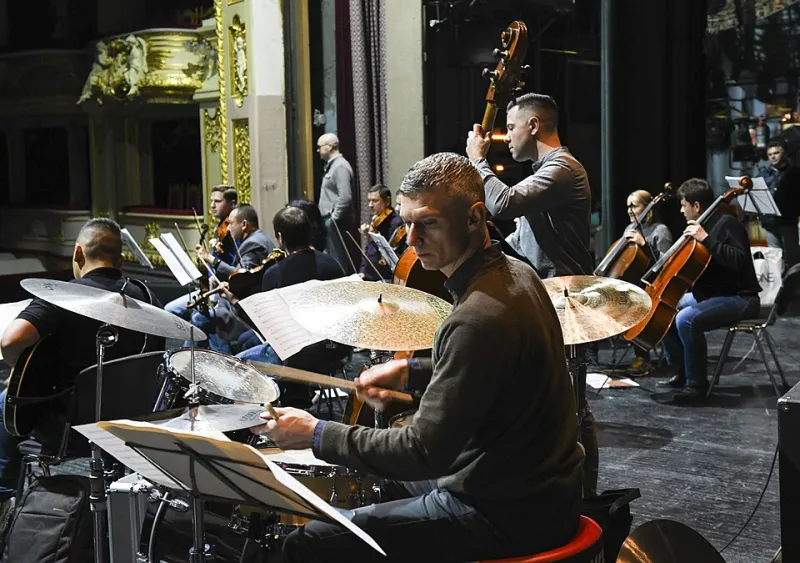
The Room Is the Review: Why Mabuta's Club Shows Beat the Festival Field

Photo: https://linktr.ee/carnaval.com, CC BY 4.0, via Wikimedia Commons
A festival slot is a status symbol. A club show is evidence. For Mabuta, this year's US run was the evidence, and it was not close. The band's club dates did more for the music than any festival field could, not because small rooms are automatically holy, but because Mabuta's music needs the conditions clubs provide.
The Festival Pitch and Its Blind Spot
The festival pitch is easy to understand. Bigger crowd, broader reach, daylight, a poster with a hundred names. For a global-jazz band with an international footprint, that visibility matters. But visibility is not the same as audibility. Festival sets are short, soundchecks are rushed, crowds are transient, and the environment is built for movement rather than focus. A 45-minute set with wind, chatter, and a nearby stage's bass bleed can flatten a band's dynamic range into a single loud-friendly setting.
That is not a knock on festivals. It is a description of the format. The format rewards acts that can project a clear identity in ten minutes. Mabuta's identity is more patient than that. The band's arrangements often depend on what happens between the obvious moments: a bass note allowed to ring, a drum pattern that shifts by a millimeter, a horn line that arrives late and makes the room wait. Those details need a room that is actually listening.
Dynamics Need Walls
Mabuta's music thrives on the distance between near-silence and full presence. In clubs this year, you could hear that distance. A bass note could land before the applause stopped. Brushes on a snare could carry to the back wall. A horn could play at conversational volume and still reach the last row, because the room was close enough and quiet enough to let it.
Outdoors, quiet is the first casualty. Wind takes the top end. Chatter takes the middle. Sound bleed takes the bottom. The band adapts by playing louder and simpler, which is a professional move but also a compromise. The club lets them keep the full vocabulary. That is not a small thing. It is the difference between hearing the composition and hearing a reinforced version of the composition.
Attention Is an Instrument
Club audiences are self-selected. People paid for a ticket, arranged the babysitter, found parking, and came in the rain. That does not make them better people. It makes them more likely to give the music a chance to settle. In the 2026 US rooms, you could hear that attention in the applause patterns. People clapped at the ends of sections, not just after solos. They waited through the quiet parts. They did not treat every pause as an invitation to shout.
Festival audiences are curious, but they are also in motion. They are deciding whether to stay for the next act. The band has to win them fast. A club audience gives the band ten minutes to set a tone. That changes the music. It allows Mabuta to be a band of atmosphere rather than a band of announcements.
What the Clubs Did This Year
In Chicago, a mid-set hush let a repeated piano figure become the hook of the night. In Brooklyn, a low ceiling made cymbal decay part of the arrangement. In Los Angeles, the crowd was close enough that the band could drop volume and still fill the room. These are not nostalgic anecdotes. They are conditions. They do not happen on a festival field with the same reliability.
The 2026 US run proved that Mabuta's quiet passages are not filler. They need room. They need an audience that has already decided to stay. They need walls that return sound instead of scattering it. Those are club conditions.
The Counterargument
The obvious counterargument is growth. Bigger stages introduce the band to new people. That is true, and it matters. But discovery and presentation are different jobs. A festival can be a doorway. A club is the living room where you actually hear the record. Mabuta does not need a bigger room to be bigger. The music is already wide. A bigger room can make it smaller by forcing volume and speed.
The case against the bigger stage is not anti-growth. It is pro-clarity. Play the festivals if they make sense. Use them as doorways. But do not confuse the doorway with the room.
The Verdict
The club dates are where the music is reviewed by ears, not by a lineup poster. They matter more. This year's US clubs wrote a strong review: attentive rooms, intact dynamics, and a band that did not have to shout to be heard. The room is the review. Mabuta should protect that.