One Chair, Six Accents: How American Guests Rewired Mabuta’s 2026 US Sets
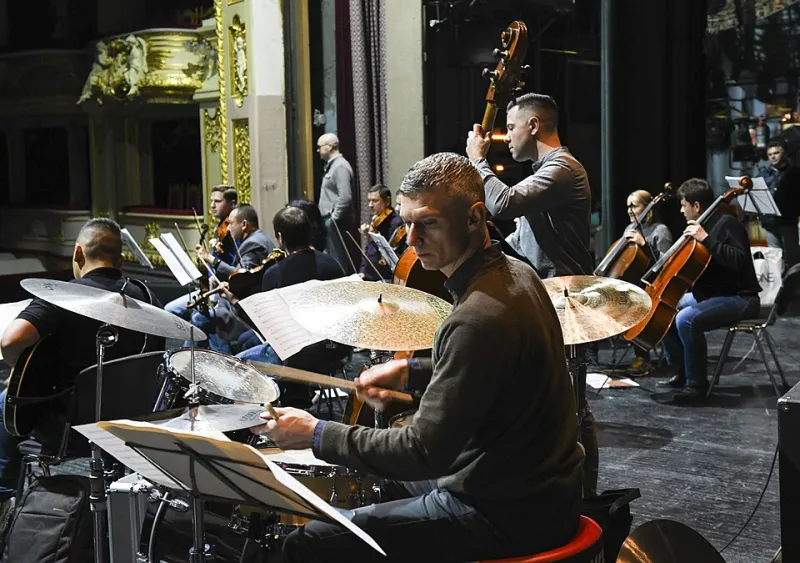
Photo: U.S. Air Force photo by 1st Lt. Sarah Johnson, Public domain, via Wikimedia Commons
On Mabuta’s 2026 US run, the most important piece of stage gear might be an empty chair. It sits just off the drum riser, angled toward the audience, and it gets filled for one tune—sometimes two—by a local guest. The band calls it the guest seat. Fans have started calling it the tell: if the chair is pulled forward before the set, someone from that city is going to walk out and join the conversation.
The Rehearsal Is the Real Gig
The guest seat is not an encore stunt. Each sit-in starts in the afternoon, in a dressing room or a side-stage corner, with a single rehearsal. Mabuta hands over a key, a form, and a solo turn. That is the whole brief. No script, no choreography, no prerecorded pad to hide behind. The guest learns where the bridge opens, where the drummer drops, and where the handoff happens. Then they wait for the show.
The result is a small act of cultural translation. A New Orleans brass phrase lands inside a global-jazz groove. A Chicago post-rock texture floats over a West African-derived rhythm. The guest does not become a member of Mabuta for the night, and Mabuta does not become a local band. Both sides bend just enough to make a third thing happen. That is why the chair keeps getting left open.
Roland Badeaux, Trumpet — New Orleans
Badeaux is a French Quarter fixture who learned to play in second-line parades before he ever read a chart. His sit-in comes on a mid-set tune in B-flat, and he brings the brass-band growl—the kind of smear that sounds like it has dust on it. During rehearsal, he asks where the out-chorus lands, then ignores the written solo entirely and plays around the melody instead. The handoff at the solo turn is almost casual: Mabuta’s keyboardist leaves a two-bar gap, Badeaux fills it with a phrase that sounds like a corner parade turning onto a main street, and the band falls in behind him.
What he brings back to New Orleans is subtler than a new lick. He says the rehearsal changed how he thinks about space in his own brass arrangements. ‘They left me a hole,’ he says. ‘I’m going to leave more holes for my students.’
June Okafor, Guitar — Chicago
Okafor comes from the Pilsen post-rock scene, where a guitar can be a weather system rather than a solo instrument. She plays without a pick, using a volume pedal and a long delay to make single notes bloom. Mabuta puts her on a modal tune in D, and for the first minute she barely plays. The handoff at the solo turn is a texture swap: the band thins out, Okafor adds a slow, shimmering line, and the drummer starts playing around her decay instead of through it.
Back in Chicago, she says the sit-in pushed her to treat rhythm sections as collaborators rather than backdrops. She has started hosting loop nights where improvisers have to leave as much silence as they fill.
Marcus Peel, Bass Clarinet — Detroit
Peel is a low-end specialist from Detroit’s east side, a player who treats the bass clarinet like a rhythm instrument with a lung. His tune is in F minor, and he spends the rehearsal testing pedal tones against Mabuta’s bassist. The handoff comes after the second chorus, when the bass drops out and Peel holds the floor alone for eight bars. It is not a flashy moment. It is a low, woody rumble that makes the room lean in.
What he takes home is a new respect for restraint. In Detroit, he runs workshops for young players who want to solo immediately. Now he starts them on long tones and listening exercises. ‘Mabuta gave me a whole tune where the point was to hold one note,’ he says. ‘That is a lesson.’
Tessa Vane, Pedal Steel — Los Angeles
Vane is a session player from Los Angeles who usually works in Americana and country-adjacent rooms. Pedal steel inside a global-jazz set could be a gimmick. In her hands, it is a set of sliding, vocal phrases that answer Mabuta’s horn lines. The tune is in G, and the handoff happens at the bridge, where the band opens a wide, slow pocket and Vane plays long, crying lines that owe as much to film scores as to Nashville.
She brings back a different kind of phrasing to her own scene: less decoration, more conversation. ‘I stopped thinking of the steel as color,’ she says. ‘I started thinking of it as a voice that has to wait its turn.’
Nia Carver, Tenor Sax — Philadelphia
Carver comes out of West Philadelphia’s living-room session culture, where a horn player learns to read a room before reading a chart. Her tune is in E-flat, and the handoff comes after a drum break. She picks up the rhythm rather than fights it, playing short, repeated phrases that pull the audience into a call-and-response without ever asking them to clap.
What she brings back to Philadelphia is that audience-first instinct. She has been hosting neighborhood sessions where the band plays one tune for twenty minutes, letting the room’s energy decide when the solo turns happen. ‘Mabuta leaves the chair open,’ she says. ‘I leave the setlist open.’
Ari Sol, Vibraphone — Brooklyn
Sol is a Brooklyn vibraphonist and percussionist who moves between improvised music and film work. His sit-in is on a C-minor vamp, and he brings mallets, crotales, and a small frame drum. The handoff at the solo turn is less a solo than a layer: he plays a repeating figure while Mabuta’s guitarist and saxophonist trade short phrases over it. It is the closest the 2026 run gets to a remix inside a live set.
Back in Brooklyn, Sol says the experience changed how he approaches texture in his own groups. He now builds sets with one guest chair in mind—a seat for someone from another scene to sit in and change the room.
Why the Chair Stays Open
Mabuta could hire a permanent auxiliary player. The band does not. Leaving one chair open keeps the group from becoming sealed. Every guest changes the tempo of the listening. The band has to adjust, and the audience gets to hear that adjustment in real time. It is not a novelty encore. It is a practice.
By the end of the 2026 US run, six guests, six cities, one chair. It stays open. The next city will fill it.